Porcelain Veneers
Premium Porcelain Veneers
From $150
- Premium porcelain veneers
- Visa assistance
- Complimentary airport, hotel, and clinic transfers
- Complimentary hotel stay
- Free consultation with a specialist dentist
- Free Cone Beam CT scan


Treatments
Premium Porcelain Veneers
From $150
Treatment costs
| Treatment | Vietnam (Melatec Prices) | United States | Australia | Philippines | Canada | New Zealand | Saving |
|---|---|---|---|---|---|---|---|
| Single Dental ImplantImplant tooth replacement | $400 | $2,500 | $3,000 | $900 | $2,200 | $3,000 | Up to 74%Up to 75%Up to 56%Up to 75%Up to 75% |
| All-on-4Full-arch restoration with four implants | $3,100 | $12,000 | $19,000 | $5,500 | $20,000 | $18,000 | Up to 74%Up to 75%Up to 44%Up to 75%Up to 75% |
| All-on-6Full-arch restoration with six implants | $3,900 | $24,000 | $25,000 | $6,500 | $30,000 | $22,000 | Up to 75%Up to 75%Up to 40%Up to 75%Up to 75% |
| Porcelain Crowns (16 Teeth)Custom crowns for damaged or weakened teeth | $850 | $14,400 | $19,200 | $1,300 | $12,000 | $11,500 | Up to 75%Up to 75%Up to 35%Up to 75%Up to 75% |
| Porcelain veneersThin porcelain shells for a natural smile | $150 | $2,000 | $1,200 | $400 | $900 | $650 | Up to 75%Up to 75%Up to 63%Up to 75%Up to 75% |
Indicative. Country medians, so a destination that leads with one city is priced across the whole country. At-home figures are a typical private-practice quote, not an insured price. Non-USD figures are converted at indicative rates and rounded. The saving compares the cheapest publishable destination on that row and is capped at the 75% we publish, even where the arithmetic runs higher. Sources and method: the pricing research index.
Treatment options
DISCOLORED TEETH
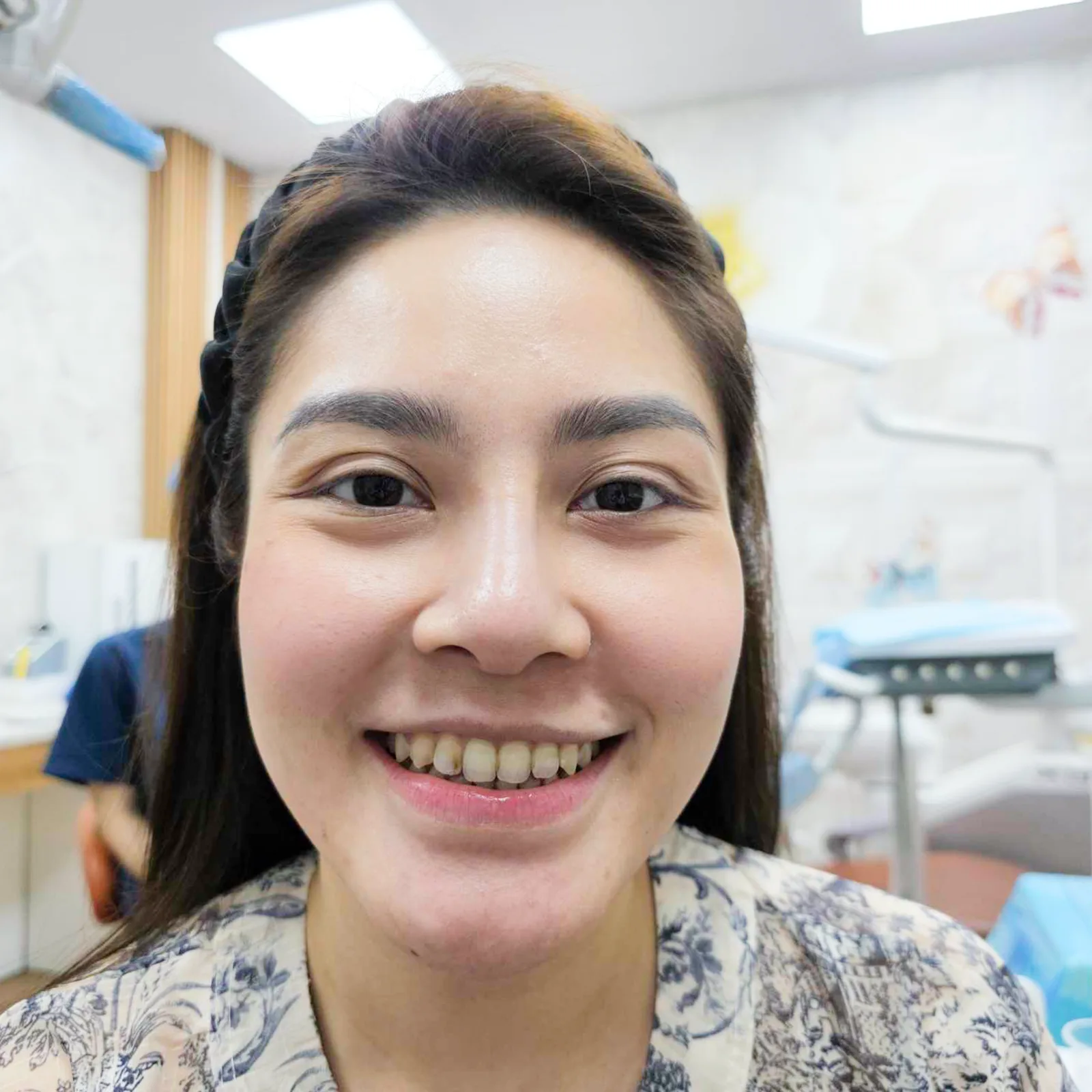
Porcelain veneers can improve the appearance of deeply stained or discolored teeth when professional whitening cannot achieve the desired result.
SMALL GAPS BETWEEN TEETH
Porcelain veneers can close small gaps between teeth, creating a more balanced smile without orthodontic treatment in suitable cases.
UNEVEN OR MISSHAPEN TEETH
Veneers can improve the shape, size, and appearance of slightly uneven or irregular teeth for a more harmonious smile.
CHIPPED OR WORN TEETH
Veneers can improve the appearance of mildly chipped or worn teeth while preserving much of the natural tooth structure.
Send the Melatec dental team a clear close-up photo of the area where your tooth is missing. We’ll review your case and recommend the most suitable treatment option for you.
How it works
Share photos of your teeth and any X-rays you have.
Receive treatment options, pricing and timelines from selected clinics.
Compare your options and choose the clinic that suits you.
Plan your visit, meet your dentist and begin treatment in Vietnam.
Results

FAQs
Porcelain veneers can last 10–15 years or longer with proper care, although their lifespan varies. Good oral hygiene, regular dental checkups, and avoiding habits such as biting hard objects help protect your veneers. If you grind your teeth, your dentist may recommend a night guard.
Veneer treatment is generally comfortable, with local anesthesia available when tooth preparation is necessary. The process typically includes a dental examination, tooth preparation, impressions or digital scans, and final bonding. You may experience temporary sensitivity afterward, but significant or persistent discomfort should be checked by your dentist.
Porcelain veneers are thin, custom-made ceramic shells bonded to the front surface of your teeth. They improve the appearance of discoloration, small chips, gaps, and uneven tooth shapes. Your dentist may remove a small amount of enamel before taking impressions and bonding the veneers. Treatment usually requires at least two appointments, depending on your case.
Vietnam can offer competitive dental treatment costs, but quality depends on the dentist's experience, the materials used, and clinical standards rather than the country itself. Before choosing a clinic, review the dentist's qualifications, treatment process, material options, and follow-up arrangements to make an informed decision.
Well-designed porcelain veneers can look very natural. Your dentist considers your facial features, tooth shape, color, and smile proportions to create a balanced result. The goal is to enhance your smile while maintaining a natural appearance, rather than making your teeth look overly white or artificial.
What are porcelain veneers? Simply put, porcelain veneers are thin ceramic shells, typically around 0.2 - 0.5 mm thick, bonded to the front surfaces of teeth to improve their color, shape, and alignment.
Unlike dental crowns, which generally require more extensive tooth preparation, porcelain veneers involve minimal enamel removal or, in selected suitable cases, may require little to no preparation. This conservative approach makes veneers a popular choice for patients who want to enhance their smiles while preserving natural tooth structure.
Porcelain veneers are an important advancement in cosmetic dentistry, offering several notable benefits:
Porcelain veneers have translucency and light-reflecting properties similar to natural teeth. When properly designed and placed, they create a natural-looking finish without conspicuous edges or an artificial appearance.
Veneers can improve the appearance of teeth affected by certain types of antibiotic-related discoloration, minor gaps, small chips, and irregular tooth shapes. After veneer placement, the smile can look more harmonious and balanced.
Porcelain veneers are made from high-quality ceramic materials designed to withstand normal biting forces. With proper oral hygiene and regular dental checkups, they can last for many years.
One of the main advantages of porcelain veneers is their conservative approach to tooth preparation. Compared with full dental crowns, veneers generally preserve more natural tooth tissue, minimize intervention, and may reduce the risk of postoperative sensitivity.
Biocompatibility and Safety
Dental porcelain is generally biocompatible and well tolerated by the surrounding gum tissue. With proper placement and oral care, veneers can maintain their appearance over time.
Porcelain veneers are not suitable for every patient. A thorough dental examination helps determine whether this treatment is appropriate based on tooth condition, bite alignment, and aesthetic goals.
People with discolored teeth whose underlying tooth structure remains healthy. People with minor gaps between their teeth. People with small chips that do not involve extensive structural damage. People who want to improve their smile while preserving as much natural tooth structure as possible.
Significant tooth misalignment. Severe bite discrepancies. Extensive tooth decay or substantial tooth fractures. Severe teeth grinding (bruxism).
In these situations, the dentist may recommend a different treatment option that better addresses the patient's dental condition rather than proceeding with porcelain veneers.
To achieve long-lasting durability and aesthetic results, porcelain veneer treatment must be performed using proper clinical techniques. At Melatec, the porcelain veneer procedure involves the following steps:
Step 1: Comprehensive Examination and Assessment The dentist examines the teeth, gums, bite, and enamel, and may recommend dental imaging if necessary. This assessment helps determine whether the teeth are suitable for veneers or require preliminary treatment for issues such as tooth decay, gum inflammation, or cervical tooth wear.
Step 2: Smile Analysis and Tooth Design Based on the patient's facial features, smile line, skin tone, and personal preferences, the dentist develops a personalized cosmetic treatment plan. The design aims to create a harmonious smile, ensuring the teeth look not only whiter but also natural and well-proportioned.
Step 3: Minimal Tooth Preparation (If Necessary) Porcelain veneer treatment follows a conservative approach that prioritizes preserving natural tooth enamel. Only a thin layer of enamel, typically around 0.2–0.5 mm, may need to be removed. In selected cases, veneers can be placed with little to no tooth preparation. The goal is to achieve adequate retention while preserving as much natural tooth structure as possible.
Step 4: Precise Impressions for Veneer Fabrication Digital or conventional impressions are taken with a high degree of accuracy, allowing the dental laboratory to fabricate veneers that fit closely against the tooth surfaces and helping minimize marginal gaps.
Step 5: Veneer Try-In and Adjustments to Color and Shape Before permanent bonding, the veneers are temporarily placed to assess their color, translucency, length, and bite alignment. The dentist makes any necessary adjustments to help ensure the veneers look and feel natural when smiling, speaking, and chewing.
Step 6: Permanent Bonding with Specialized Dental Adhesives A dedicated bonding system designed for porcelain veneers is used to achieve strong adhesion and long-term stability. Finally, the dentist checks the bite and polishes the veneers for a smooth, finished appearance.
Visit us
Melatec Dental Clinic
Headquarters26 Doan Thi Diem, O Cho Dua, Hanoi
Phone / WhatsApp+84 98 940 22 11
Opening hoursMonday–Sunday · 8:00–20:00
We provide consultation support in English and flexible scheduling for overseas patients.


