What Are Dental Implants?
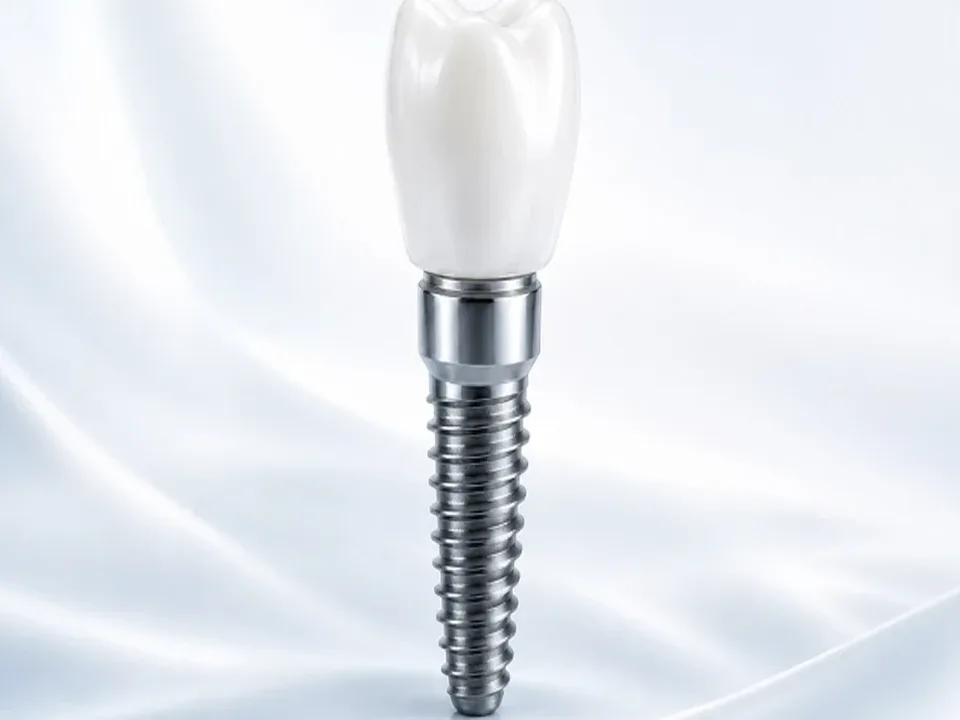
Dental implants are artificial tooth roots, typically made from biocompatible titanium, that dentists surgically place into the jawbone to support replacement teeth. Unlike traditional removable dentures, implants provide a stable foundation for fixed crowns, implant-supported bridges, or full-arch restorations.
Following placement, the implant gradually bonds with the surrounding bone through a biological process called osseointegration. This process creates the stability needed to support the final dental restoration.
A complete single-tooth implant restoration generally consists of three components.
- Dental Implant Fixture
The implant fixture is a small, threaded post inserted into the jawbone. It replaces the missing tooth root and provides support for the restoration above.
- Abutment
The abutment connects the implant fixture to the final crown. Dentists select an appropriate abutment based on the implant position, surrounding gum tissue, and restorative requirements.
- Dental Crown
The dental crown is the visible replacement tooth. Dentists commonly use ceramic materials, such as zirconia, to create a restoration that matches the shape and appearance of the surrounding natural teeth.
What Are the Benefits of Dental Implants?
Dental implants provide several functional and aesthetic benefits compared with conventional tooth replacement options.
Restore Natural Chewing Function
Missing teeth can make it difficult to chew certain foods or distribute chewing forces evenly. Once the implant has integrated with the jawbone and the restoration is complete, patients can often regain comfortable, stable chewing function.
Implant-supported teeth also eliminate many of the movement-related concerns associated with removable dentures.
Preserve Adjacent Natural Teeth
Traditional dental bridges often require dentists to prepare neighboring teeth to support the replacement tooth.
A single dental implant can replace a missing tooth without routinely reducing the enamel of adjacent healthy teeth. This helps preserve more natural tooth structure.
Help Maintain Jawbone Structure
Following tooth loss, the surrounding jawbone can gradually decrease in volume because it no longer receives normal functional stimulation from the missing tooth.
Dental implants transfer chewing forces to the surrounding bone and can help limit bone loss in the treated area. However, implants do not completely eliminate all future changes in bone and gum tissue.
Improve Smile Aesthetics
Implant-supported crowns can be designed to complement the size, shape, and color of adjacent teeth.
Careful planning of the implant position, crown contour, and surrounding gum tissue helps achieve a natural-looking restoration.
Provide a Long-Term Tooth Replacement Option
Dental implants can function successfully for many years with proper care and regular professional maintenance.
Their longevity depends on factors such as oral hygiene, gum health, implant positioning, medical conditions, and lifestyle habits. The implant fixture may remain functional for decades, while the attached crown or prosthesis may eventually require repair or replacement.
Who Is a Suitable Candidate for Dental Implants?
Dental implants may be appropriate for adults who have lost one, several, or all of their natural teeth.
Potential candidates include:
- Patients with a single missing tooth who want to avoid preparing adjacent healthy teeth.
- Patients with multiple missing teeth who require a fixed implant-supported restoration.
- Patients who experience discomfort or instability with removable dentures.
- Patients with extensive tooth loss who may benefit from full-arch implant treatment.
- Patients with sufficient jawbone volume, or whose bone condition can be improved through additional treatment.
Before recommending dental implants, dentists assess the patient's overall health, existing teeth, periodontal condition, and available jawbone.
How Does the Dental Implant Procedure Work?
Dental implant treatment involves several stages designed to support accurate placement, proper healing, and a stable final restoration.
Step 1: Comprehensive Consultation and Examination
The process begins with a review of your dental concerns, medical history, and treatment expectations.
Your dentist examines the teeth, gums, bite, and surrounding oral structures. Dental X-rays and cone-beam computed tomography (CBCT) may be recommended when three-dimensional assessment is clinically necessary.
These examinations help evaluate bone dimensions, identify important anatomical structures, and determine suitable implant positions.
Your dentist then discusses the recommended treatment approach, expected timeline, and estimated cost.
Step 2: Preparing the Implant Site
Some patients require preliminary procedures before implant placement. These may include tooth extraction, periodontal treatment, bone grafting, or sinus floor augmentation.
Bone grafting helps rebuild bone volume when the jawbone lacks sufficient support for an implant.
Not every patient requires these procedures. The need for additional treatment depends on individual clinical findings.
Step 3: Dental Implant Placement
During implant surgery, the dentist administers local anesthesia to numb the treatment area. Sedation may be considered when appropriate.
The dentist prepares the implant site and places the fixture into the jawbone according to the surgical treatment plan.
A healing component or temporary restoration may be fitted, depending on implant stability and soft-tissue conditions.
Patients receive instructions for caring for the surgical area during the initial healing period.
Step 4: Healing and Osseointegration
Following placement, the surrounding bone gradually integrates with the implant surface. This process commonly requires several months, although healing times vary according to the implant site, bone quality, medical factors, and treatment approach.
Your dentist monitors healing before deciding when the implant can safely support the planned restoration.
Step 5: Final Prosthetic Restoration
Once sufficient implant stability and healing have been confirmed, the restorative phase begins.
Your dentist records the necessary impressions or digital scans and designs the final crown, bridge, or full-arch prosthesis.
The completed restoration is fitted and adjusted to support appropriate bite contacts, comfort, and appearance.
Regular follow-up appointments help monitor implant function and surrounding tissue health.
Restore Your Smile with Melatec Dental Clinic
Replacing missing teeth involves more than restoring their appearance. Appropriate dental implant treatment should also support comfortable chewing, long-term oral health, and stable restorative function.
At Melatec Dental Clinic, treatment planning focuses on understanding each patient's individual needs and identifying suitable restorative options.
Whether you are considering a single-tooth implant, multiple dental implants, or full-arch rehabilitation, an initial consultation can help you understand the available approaches and expected treatment timeline.
Planning dental implants in Vietnam? Contact Melatec Dental Clinic to discuss your dental concerns and request a preliminary treatment plan before your trip.