How Soon After Tooth Extraction Can I Get an Implant?
How soon can you get a dental implant after tooth extraction? Melatec Dental Clinic explains healing times, implant options, and treatment planning.

Tooth extraction is often the final option when a natural tooth is severely damaged and cannot be saved. Once a tooth is removed, replacing it becomes an important consideration for restoring chewing function, maintaining your smile, and supporting long-term oral health.
Dental implants offer a reliable option for replacing missing teeth. However, one of the most common questions patients ask is how soon after tooth extraction can I get a dental implant?
The answer depends on your jawbone condition, gum health, and the healing process following extraction. Some patients can receive an implant immediately, while others may need several weeks or months before surgery.
In this article, the dental team at Melatec Dental Clinic explains the different implant placement timelines, what affects healing, and how your dentist determines the appropriate time for treatment.
How Long Should You Wait After Tooth Extraction Before Getting an Implant?
You may receive a dental implant on the same day as tooth extraction, after 4 to 8 weeks, or after 12 to 16 weeks of healing. Some patients require a longer waiting period when the extraction site needs additional bone healing or treatment.
According to the International Team for Implantology (ITI), dentists classify implant placement timing into three main categories.
- Immediate implant placement: The dentist places the implant during the same appointment as tooth extraction.
- Early implant placement: The dentist places the implant after approximately 4 to 8 weeks of soft tissue healing or 12 to 16 weeks of partial bone healing.
- Late implant placement: The dentist places the implant after more than six months, when the extraction site has undergone substantial bone healing.
These timeframes describe different treatment approaches rather than fixed waiting periods for every patient. Your dentist must assess the extraction site and available bone before recommending when to proceed.
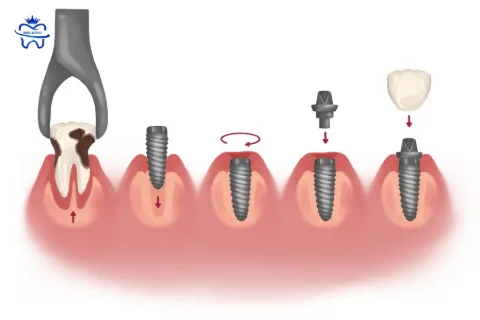
Dental Implant Placement Timelines After Tooth Extraction
Each implant placement approach has its own clinical requirements, benefits, and limitations. Understanding these differences can help you prepare for treatment and know what to expect during recovery.
Immediate Dental Implant Placement After Tooth Extraction
Immediate implant placement involves inserting a dental implant into the jawbone during the same appointment as tooth extraction.
This approach may reduce the number of surgical procedures and shorten the overall treatment process. However, it requires careful assessment because the extraction site must provide adequate support for the implant.
Your dentist may consider immediate placement when:
- The extraction socket has sufficient healthy bone to support the implant.
- The surrounding bone walls remain intact.
- The gum tissue provides adequate coverage and support.
- The implant can achieve sufficient primary stability.
- The site has no acute infection that would make immediate placement unsuitable.
A history of infection does not automatically rule out immediate placement in every case. Your dentist must evaluate the type of infection, the remaining bone, and whether the site can be thoroughly cleaned before deciding.
Advantages May reduce the number of surgical appointments.
Can shorten the overall treatment timeline.
Allows tooth extraction and implant placement during the same visit.
May help preserve the surrounding soft tissue architecture in selected cases.
Limitations Immediate implant placement requires sufficient bone for primary stability and careful management of the surrounding tissues.
Natural bone remodeling still occurs after tooth extraction, even when the dentist places an implant immediately. Some patients may also require bone grafting or additional soft tissue procedures.
Dental Implant Placement 4 to 8 Weeks After Extraction
Early implant placement after 4 to 8 weeks allows the gum tissue to heal before the dentist places the implant.
During this period, the extraction socket develops new soft tissue coverage, which may provide more favorable conditions for surgical management.
Your dentist may recommend this timeframe when:
- The extraction site requires additional soft tissue healing.
- The surrounding bone needs further assessment.
- The site has sufficient bone volume for implant placement.
- Local inflammation or infection requires treatment and reassessment.
Advantages
Allowing several weeks of healing gives the dentist an opportunity to evaluate the condition of the extraction site and plan implant placement after the gum tissue has recovered.
Limitations
The jawbone continues to remodel during this period. Depending on the remaining bone volume and the planned implant position, your dentist may recommend bone grafting at the time of surgery.
Dental Implant Placement 12 to 16 Weeks After Extraction
Implant placement after approximately 12 to 16 weeks allows more time for partial bone healing within the extraction socket.
Your dentist may recommend this approach when the surrounding bone requires additional healing before it can adequately support an implant.
For example, patients with damaged socket walls or substantial bone defects may benefit from a staged treatment plan.
Advantages
- Allows additional bone healing before implant placement.
- Gives the dentist more time to assess changes in the extraction site.
- May provide suitable conditions for implant placement when immediate surgery is not appropriate.
Limitations Waiting several months does not completely prevent jawbone resorption. Some patients may still require bone augmentation to provide sufficient bone for the implant.
Dental Implant Placement After Six Months or Longer
Some patients undergo implant surgery more than six months after tooth extraction.
At this stage, the extraction site has generally undergone substantial bone healing and remodeling. However, the amount of remaining bone varies between individuals.
A longer waiting period does not automatically make implant placement safer or more predictable.
After tooth loss, the jawbone gradually changes because it no longer supports the natural tooth root. These changes may reduce the available bone volume and make implant placement more complex.
For patients who have been missing a tooth for several months or years, the dentist may recommend bone grafting before or during implant surgery.
The ITI consensus on implant placement and loading protocols also highlights the potential for alveolar ridge resorption when implant placement is delayed.
How Do Dentists Determine the Right Time for Implant Placement?
Choosing the appropriate implant timing requires more than simply counting the weeks after tooth extraction.
Your dentist will examine the extraction site, evaluate gum health, and review the available bone.
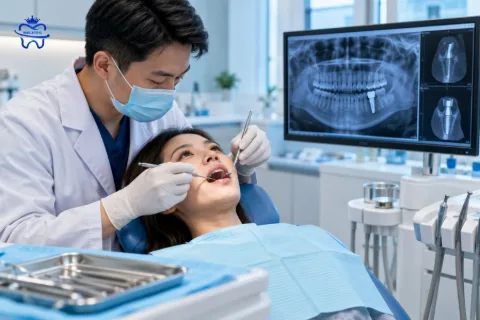
For implant planning, cone beam computed tomography (CBCT) provides three-dimensional images of the jawbone and surrounding anatomical structures.
A CBCT scan helps dentists assess bone volume, identify important structures such as the mandibular nerve and maxillary sinus, and plan implant positioning.
The American Dental Association and American Academy of Oral and Maxillofacial Radiology clinical recommendations support CBCT assessment for presurgical dental implant planning while emphasizing appropriate patient selection and radiation exposure.
After reviewing the clinical findings and imaging, your dentist can discuss the treatment options, potential need for bone grafting, and expected healing timeline.
Dental Implant Treatment Planning at Melatec Dental Clinic
Planning dental implant treatment involves evaluating your oral health, understanding your treatment goals, and choosing a suitable surgical and restorative approach.
At Melatec Dental Clinic, you can discuss your tooth replacement needs with the dental team and ask about the assessments required before implant placement.
Three-Dimensional Implant Planning When clinically indicated, CBCT imaging helps dentists evaluate the available jawbone and identify important anatomical structures before surgery.
This information supports treatment planning, particularly when the extraction site has limited bone or requires additional procedures.
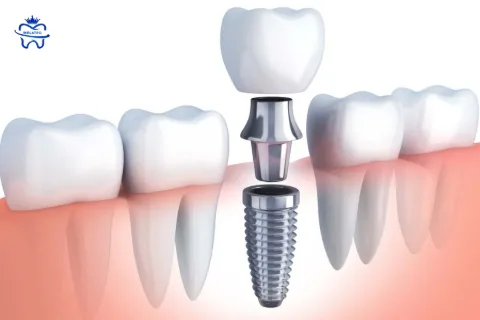
Implant Restoration Options Following implant placement and sufficient healing, the dentist can restore the missing tooth using an implant-supported crown.
Depending on the implant system and clinical requirements, the restoration may use a screw-retained or cement-retained design.
Your dentist will explain the proposed restoration and its maintenance requirements as part of treatment planning.
Monitoring Implant Stability Dentists assess implant stability before deciding when to proceed with the final restoration.
Clinical examinations and appropriate imaging provide information about healing. In some treatment settings, clinicians also use resonance frequency analysis to obtain additional measurements of implant stability.
These measurements support clinical decision-making but cannot independently confirm successful osseointegration.

Conclusion
How soon after tooth extraction can you get a dental implant? Some patients qualify for immediate implant placement, while others need 4 to 8 weeks, 12 to 16 weeks, or a longer healing period.
The appropriate timing depends on the condition of your jawbone, gum tissue, extraction site, and overall oral health.
A dental examination and appropriate imaging help determine whether you are ready for implant surgery or need additional treatment before placement.
If you are considering dental implants in Vietnam, contact Melatec Dental Clinic to discuss your tooth replacement options and arrange a dental consultation.
Medical Disclaimer: This article provides general educational information and does not replace professional dental advice, diagnosis, or an individualized treatment plan. A qualified dentist must evaluate your oral health and medical history before recommending dental implant treatment.
Planning treatment in Vietnam?
Tell us what you need and our team will prepare a free treatment plan.
Get a free plan WhatsApp us